FAST EXIT & the Art of the Perfect Finish
There’s nothing quite like a Transpac finish.
After more than 2,200 nautical miles of bluewater, teams surge into the Moloka‘i Channel for the final sprint to Diamond Head — running on grit, adrenaline, and the promise of land, loved ones, and an ice-cold Mai Tai. Months of preparation, sleepless nights, and ocean miles all lead to these last electrifying moments.
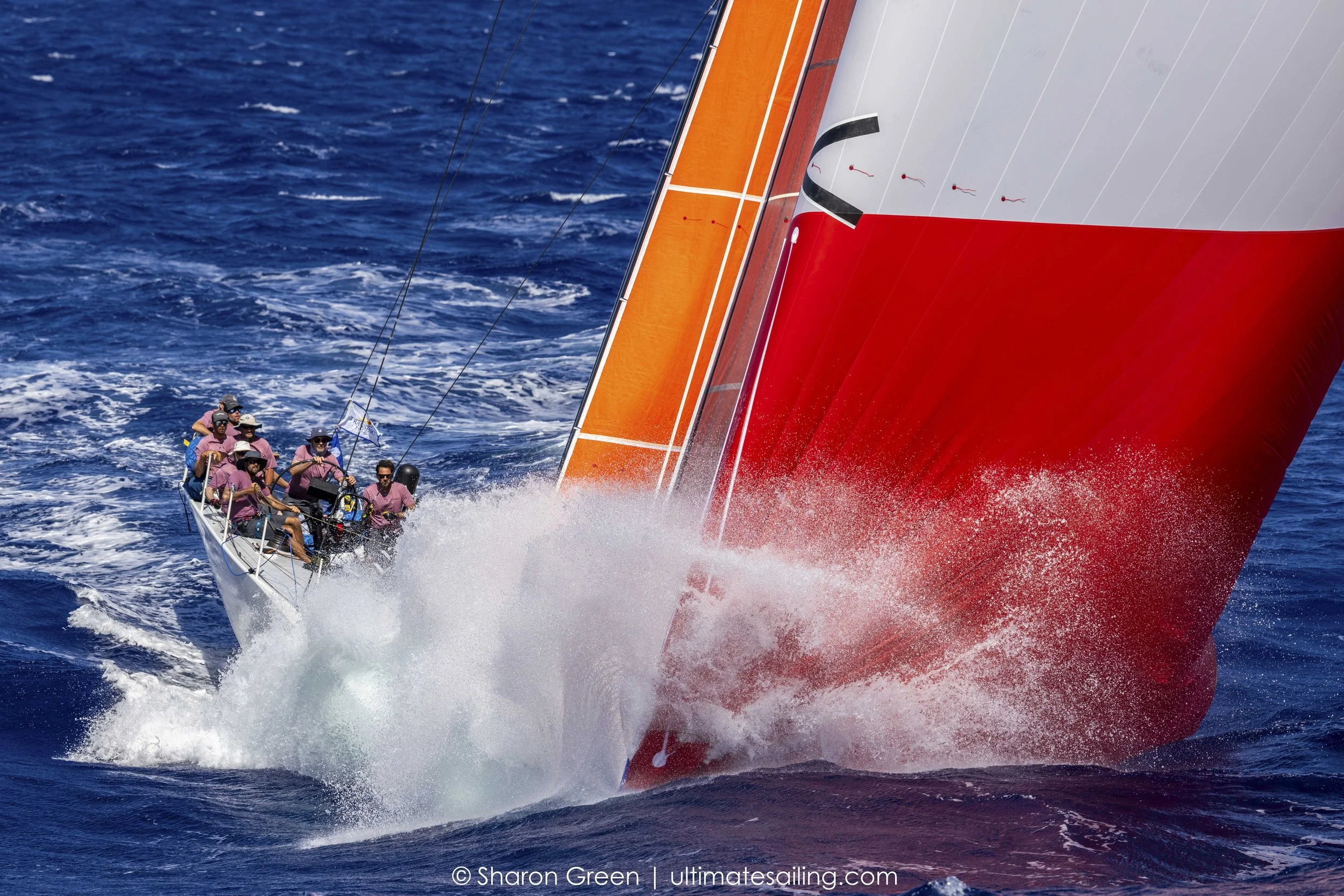
FAST EXIT charging down the Molokai Channel during Transpac 2023
The December 2025 image captures FAST EXIT, with John Raymont and crew charging toward Diamond Head, the boat completely powered up — bow digging into massive Pacific waves, surfing down the faces, spinnaker blazing. You can feel the determination and adrenaline as they drive toward the finish. An aerial photographer’s dream. Pure Transpac energy in one frame.
Behind the Lens: The Choreography of a Finish
A Transpac finish shot doesn’t happen by accident. It’s precision. Timing. Choreography.
Betsy Senescu tracks the boat all day and all night — monitoring their boat speed, course, wind direction and speed, and projected arrival while I sleep with one eye open. We only fly during daylight, so every finish window becomes a moving target. Sometimes we take off before the sun rises and fly until the sun sets, squeezing every minute of light to meet the boats as they charge toward O‘ahu.
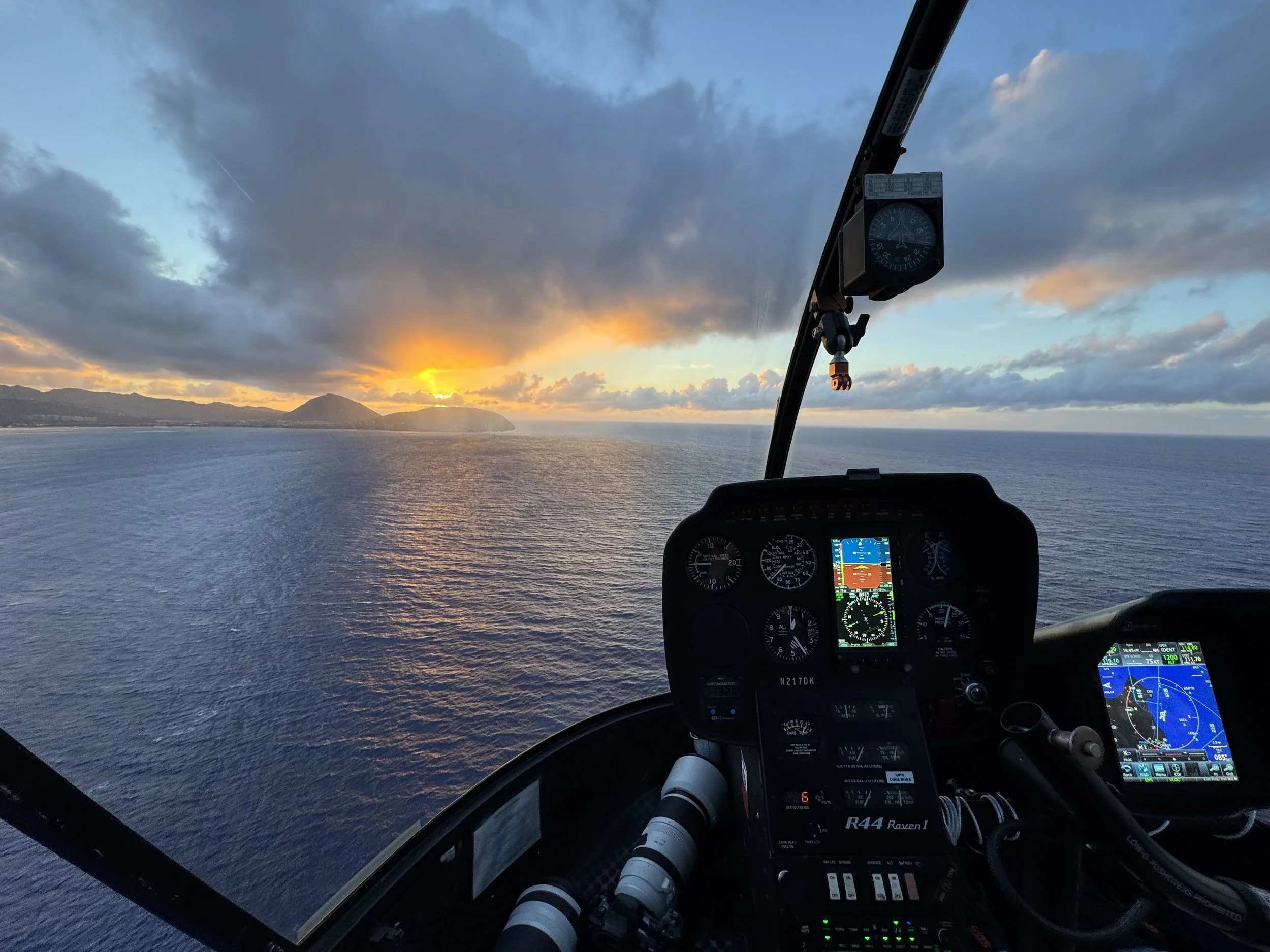
Dawn Patrol heading out to intercept a Transpac competitor
Before we even get airborne, there’s a flurry of prep: batteries charged, cards cleared with plenty of space, lenses cleaned, and three camera bodies each rigged with three different lenses. No camera straps — ever — they get caught in the headset and become a hazard with the doors off. Everything must be ready, reachable, and locked in. There are no do-overs when you’re flying 10–500 feet above the Pacific.
Together we calculate exactly when we need to lift off, how long it will take to intercept the boat, and how much air time we have before refueling — especially if another finisher is closing in behind them.
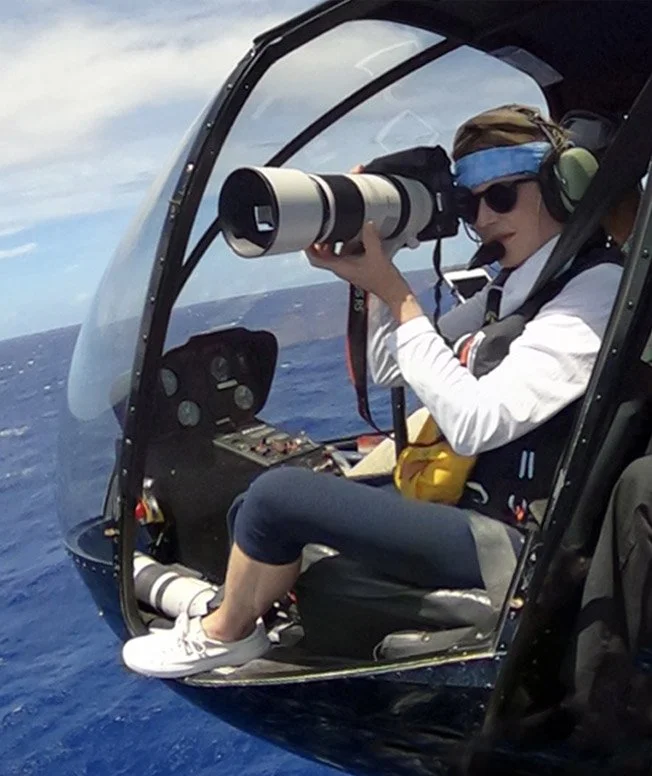
Sharon Green in R44
Once we lock in the window, the dance begins: coordinating with the navigator, watching the boat’s trajectory, timing the helicopter launch, and reminding the crew to tidy the deck, put on their team shirts, and get the owner on the helm. The adrenaline is real — and so is the nail-biting.
The doors-off R44 lifts into the Hawaiian sky. And as O‘ahu rises ahead, the first thing many teams see after 2,200 miles is a helicopter flying straight at them — with me and the videographer perched in the open doors.
And yes, everything has to go right:
• Take off too early or too late? Missed intercept.
• Weather shifts? Plans unravel.
• Mechanical hiccup? Game over.
• Camera glitch? Nightmare.
I can’t radio a crew that’s sailed across the Pacific and say, “Hey, I missed the shot — can you go back and do it again?”
My favorite spot? The Moloka‘i Channel — 15–30 miles out, where the wind is up, the seas are big, and boats are absolutely sending it. That’s where Transpac magic happens.
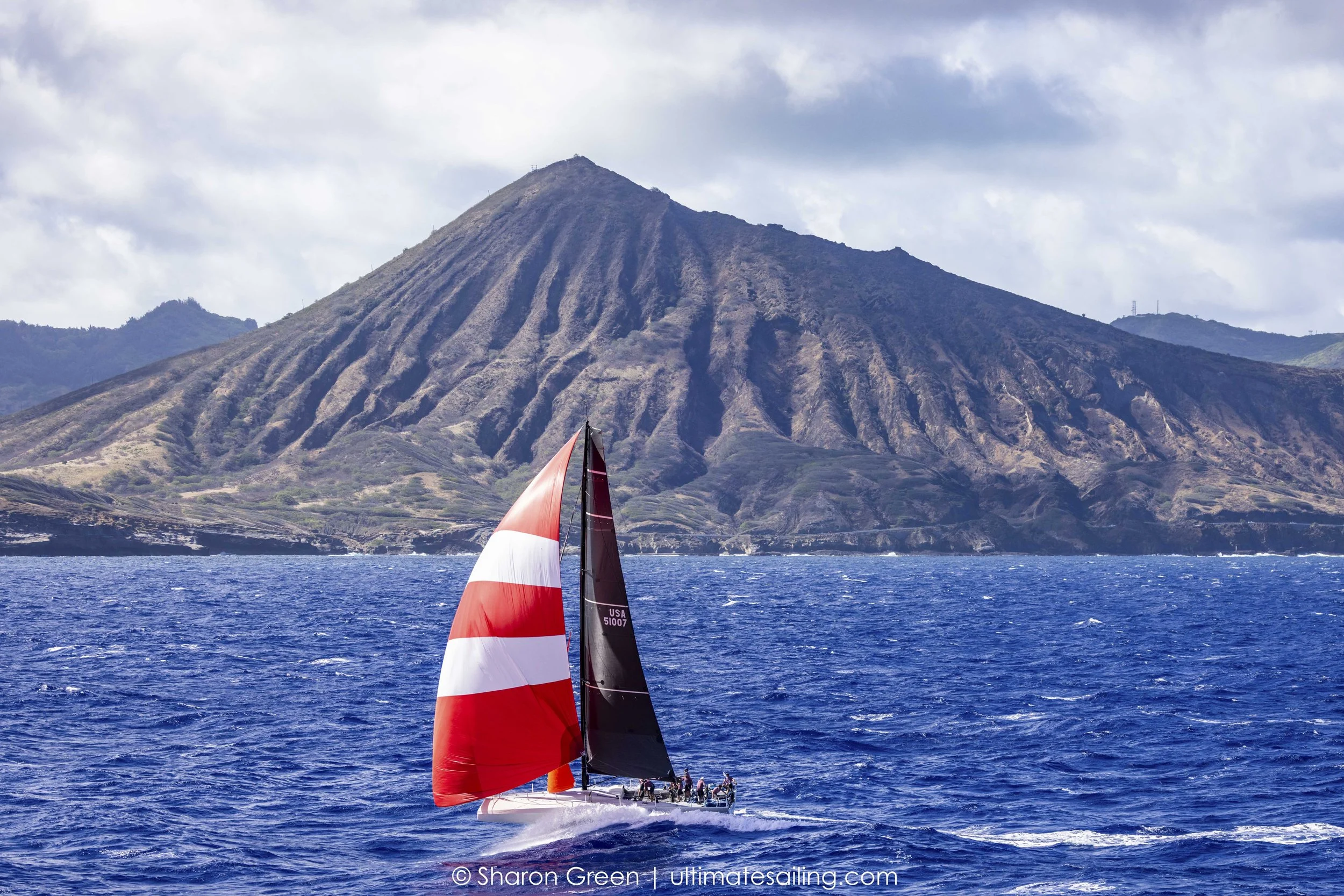
Moloka’i Channel
It’s a thrill every time: meeting each boat alone in the ocean, matching speed flying backward, seeing their crew light up as we buzz around. And yes — they always hear my mantra:
“When you see the helicopter: clean up the deck, put on your shirts, and put the owner on the helm!”
One frame becomes the memory of a lifetime. Salt spray and exhaustion fade. Photos last.
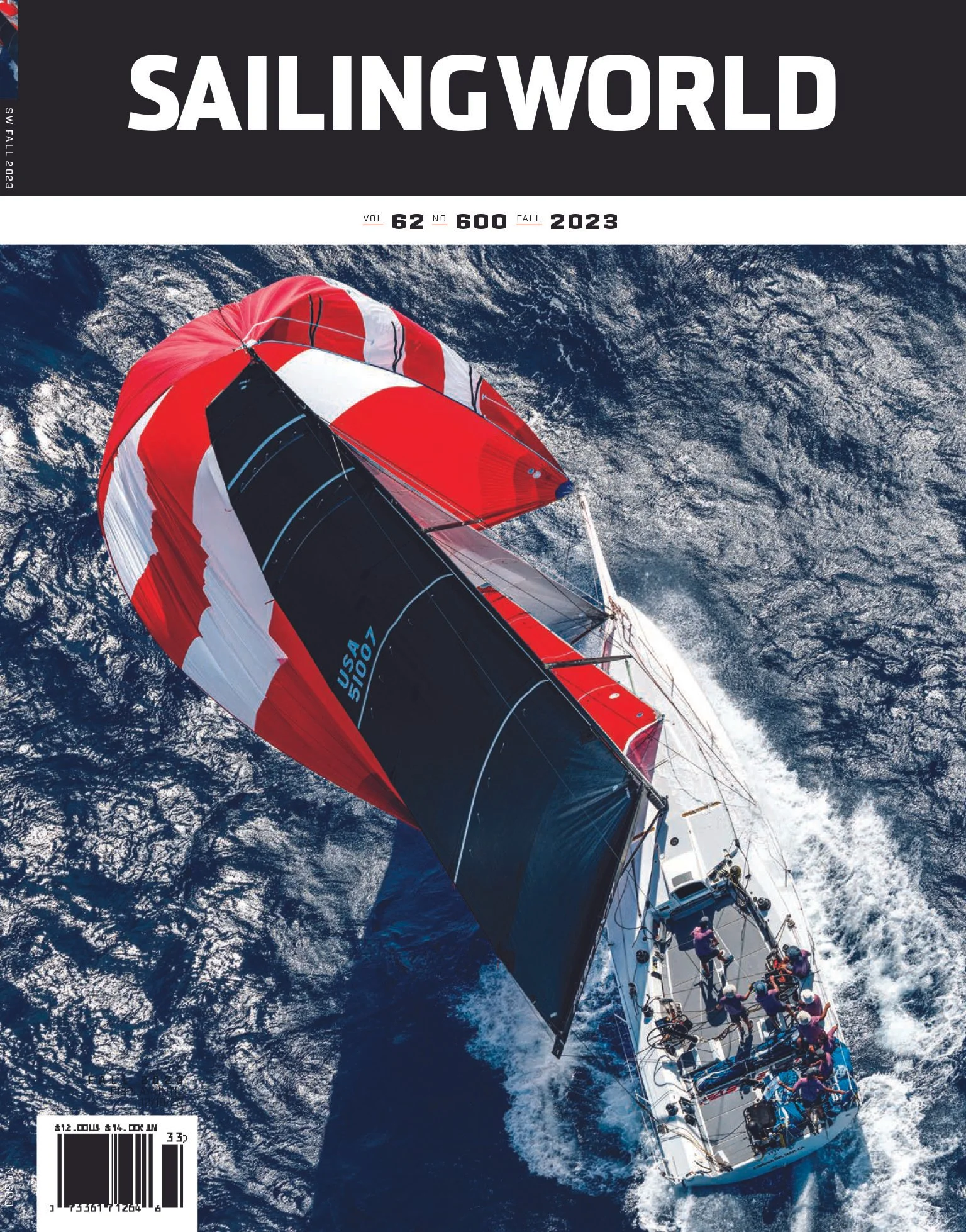
What makes a cover
Whether for the Ultimate Sailing Calendar or a magazine, a cover image needs to hit instantly — before anyone reads a single word.
My criteria:
- unmistakable energy and motion
- clean, decisive composition
- color that pops
- a full story in one glance
I shoot thousands of frames at every event. Only a handful make the “maybe” stack. But sometimes — right there in the helicopter — I know I’ve captured the one.
Those instincts have produced hundreds of covers for sailing publications.
SAILING WORLD’s cover featuring FAST EXIT
Looking Toward 2026
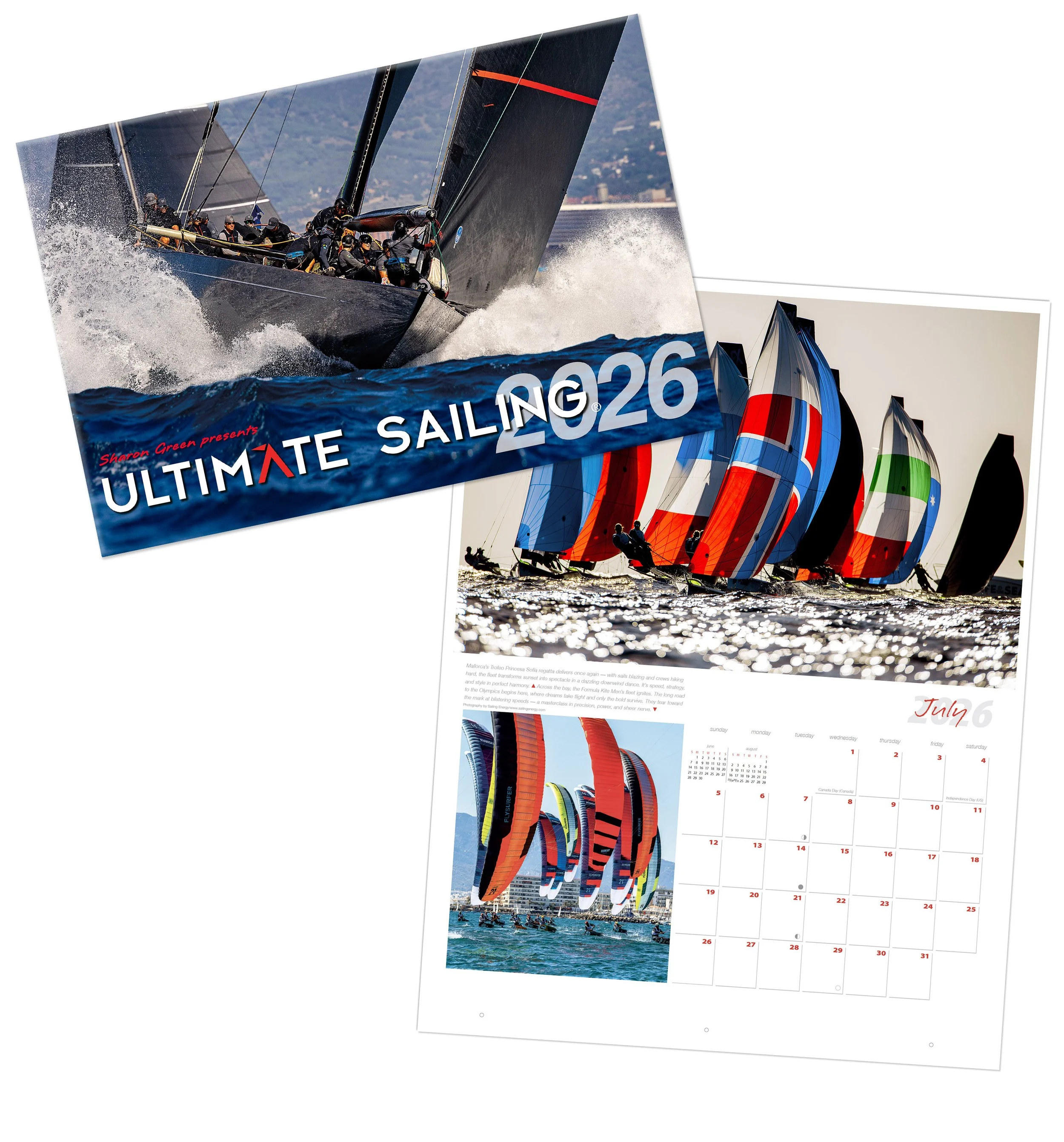
Calendar production begins nearly a year before release — editing, proofing, printing, shipping. Every image must hold someone’s attention for a full month.
The 2026 Ultimate Sailing Calendar is now complete, and I’m especially proud of this year’s collection. Each photograph carries the same spark I felt chasing FAST EXIT down the Moloka‘i Channel.
Wherever this finds you — sailing, working, or dreaming — may this December moment bring a warm Pacific breeze into your day… and remind you that the next great moment is already building just over the horizon.
- Sharon Green